
What has brought you joy?
Companion to the last question :)
You must log in or # to comment.
Soundpeats Wireless Airbuds. They are just really good wireless headphones for the price point. Pre tariffs I got them for like $40. I like that I don’t have to stress about losing them.
My Hansker Performance mouse. No wrist pain anymore and I can switch it between desktop and my laptop using the switch on the bottom
The most recent, best tech purchase was the Nintendo Switch 2, and not for the reasons you think.
So, this is Denmark. A Switch 2 with Mario Kart World goes for 4000 DKK (€535, $630). With my budget there isn’t a chance in hell I could afford that. Even if I could, the Switch 2 simply isn’t worth it, especially considering I have a Steam Deck.
So what’s the story?
Well, last year a telecommunications company rebranded themselves into “Norlys” (“Northern Lights”) and started making some deals to attract costumers. One such deal was a 20% discount on a Switch 2 with Mario Kart World bundled, if you subscribed to their most expensive service. Yeah whatever, that’s still 3200 DKK (€428, $504) and then you’re stuck paying 300 DKK (€40, $47) every month for six months.
But…
I have a friend who works for Telenor, and he has a friend who works for Norlys, and my friend of a friend called my friend with a real hot insider tip; someone royaly fucked up somewhere, and anyone buying the Switch 2 and the six month subscription lock-in will get it for 99 DKK (€13, $16) and no subscription lock-in!
So yeah, me and my friends all got a Switch 2 and a game for a tiny fraction of the cost.
Nice
Always feels like you won this life
For me the best tech purchases aren’t really the ones that bring me joy. They’re the ones that become invisible because they take away points of friction.
So I would say my Brother printer is one. It’s been incredibly reliable for more than a decade now.
Switching over to Ubiquiti Unifi access points for wifi has been worth it too. It’s a pain to run wires for them, but having a solid signal everywhere in the house in all kinds of weather is just amazing. They’ve been running for a decade too, though I did just replace one so I can have a 6GHz connection in one room. Not really sure that particular upgrade was actually worth it, but the system as a whole has been so nice. There’s just never anything to fix about the wifi anymore. (Well, okay, occasionally there’s something to fix with the Internet, but it’s usually just “Comcast is down,” and we have to wait until they fix it, and sometimes also reboot the modem. The wifi itself is pretty bulletproof.)
So yeah. Tech that works reliably and invisibly for years on end is what I find really valuable. Gadgets can certainly be fun, but great tech is just there in the background making things easier.
Steam Deck, hands down. It rules being able to play PC games in bed with my partner by my side.
Its sooo gooood!
I thought about getting one but took to long to decide and now they are not available anymore :(
I was on the fence when it was first announced (just because i had heard the reports about steam machines back in the day) but when I found out you could open it up and upgrade the storage yourself I decided to bite the bullet.
I have never regretted the purchase. I immediately stopped gaming on my (Linux) desktop and have been gaming on the Steamdeck now (almost) exclusively for the past like 3 years. I’ve upgraded the storage (64GB to 512GB) and replaced the thumbsticks when the old ones fell apart.
Tl;dr: Agree! Steam Deck no regrets!
My ebook reader. In the German speaking area, there are even some DRM free ebooks available that I can buy.
Libraries also lend e-books. Having fun isn’t hard when you got a library card 🐜 🐻 🎶
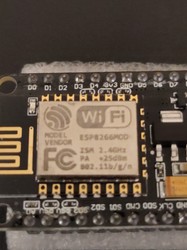
Not a purchase per-se, but Linux - investing time in learning it has paid for itself hundreds of times over. A MacBook Air with apple silicon - it hurts to use anything else. ESP8266s / ESP32s with ESPHome - being able to craft real world solutions with very limited electronics skills is amazing.
Noise cancelling headphones are incredible, using them in a noisy airport eliminated 80% of the discomfort of travelling
Yup. Autistic and noise cancelling headphones help me in all kinds of environments I wouldn’t be able to deal with otherwise. Including the airport!
I still need to find some good NC earbuds though. The Bose quiet comfort are fantastic but unfortunately known to stop working repeatedly (I’m about to get my 6th pair replaced through warranty over about 18 months!)
noisy *office
discomfort of *coworkers
(except you Sean, you’re okay)
mine hurt my ears after an hour. it doesn’t happen though when I turn the noise cancelling off.
Some noise canceling is better than others. If you get a chance to try another set, see if it still hurts
i’ve had three pairs, three brand. same effect.
i think the noise cancelling is just too loud on the airplane.
- Steam Deck (I spend 90% of my time gaming on my couch than at my desk)
- Minidisc Players (There was some MD hate in the other thread but community-made software has come a long way)
- Kobo (Freeing myself from Amazon’s DRM)
- DAS (Creating my own media collection on Jellyfin)
Appreciate the MD love. Super fun format and slick tech. It’s over 25 years old and still feels like the future.
I have heard of NAS to but What is a DAS?
Direct Attached Storage. It’s kinda like NAS but not in network. One could argue it’s just an external hard drive. If I remember correctly I went with one because it was more affordable. I was on a tight budget at the time.
The Dirtywave M8 handheld music tracker. It’s a studio in your pocket. It looks like a goth Game Boy, using only 8 keys to create entire songs. It has multiple synth engines, a sampler, built in limiter, compressor, and effects, an amazing sequencer, and it just sounds awesome. It can be an audio interface, it can control other hardware synths, and you can use it anywhere.
Once you learn the basic controls and navigation, the user interface is easy and consistent. I suck at making music, but I can do it so fast on the M8 because it’s always with me and I can grab random chunks of downtime to work on songs instead of wasting time doomscrolling on Lemmy.
….wait
My Fairphone 5, because it has allowed me to break free from Google and other big tech companies by letting me install whatever I want on it.
And my good old Thinkpad.
Nice i have a fairphone 4. Such good phones!
Yup I just got the FP6 and I am really happy with it.
i’m so annoyed cus i have one but aus put a law making sims not work on it anymore :<
Two right now. One is a Kobo e-reader. The other is a bone conduction headset. The latter allows me to ride my bike with my tunes but allows me to hear traffic and other environmental hazards. Very comfortable to wear too.
How’s the sound quality?
Really depends on the fit. If the induction pads sit on your head properly the sound is honestly better than similarly priced earbuds, with the added bonus of no occlusion sounds, which I hate. I get the best results with mine when I wear them under over-ear nose protection earmuffs. Also they can be drowned out easily by regular sounds like traffic. I took them on a flight and couldn’t hear a thing over the engine nose.
TLDR try before you buyThanks!
Not a purchase, but Home Assistant is easily the most enjoyable gadget and piece of tech I’ve had in years. It’s ridiculously flexible and can do just about anything you can imagine.
I’ve been able to automate dumb devices (like an old top-of-the-line receiver) and give them smart features rather than spending thousands to replace them. Occupancy detection saves energy by changing thermostat settings when people aren’t home, and lights come on when we’re 60’ from the front door after a walk. Multiple leak detectors and a temperature sensor in the fridge let us know when something’s wrong before damage occurs. We get notifications when the dryer and washer cycles are complete allowing us to complete the laundry in one day instead of two.
The system is configured to change change interior light brightness and hue based on time of day so at 7PM we have bright room lighting and at 2AM it’s very dim. We get immediate notifications of package deliveries with the integrated Frigate NVR and a $15 camera. Firewall settings are dynamically changed so devices that require Internet access only have it when they are actually in use. Integrations exist for VLC, Spotify, Jellyfin, Paperless, Apple, TVs, alarm systems, solar power systems, routers, automobiles, and hundreds of other brands and devices.
Yes, much of the same can be done with connected appliances, lights, and other smart devices using separate apps and control interfaces for everything, but what’s different about Home Assistant is it’s all integrated and all control and storage can be local. We have no cloud or corporate services involved for any of this. Google, Apple, Amazon and Samsung can’t one day decide to pull the plug on things we’ve already paid for.
The big problem with Home Assistant is there are so many uses you can easily end up spending way too much time tinkering and never get anything else done.
How much work was it to set all that up and how much did it cost? I’ve messed around with home assistant, but found the upfront cost (in time and money) a bit high for automating a handful of things.
I started with things I already had, an old Raspberry Pi, some smart plugs and bulbs, an alarm system, wifi thermostat and OpenWRT router and initially installed the software just to play around. It didn’t take long before I was able to control everything from a single dashboard instead of multiple web pages and apps. I found that since it connects everything it can change the thermostat and turn on lights when alarm system motion detectors or door sensors are triggered or not triggered for a few hours. Our cell phones are used for presence detection and none of that required additional hardware.
The additions beyond that have been done slowly and the costs have been minimal. At this point I’ve probably I’ve probably spent <$450 over 4 years including $180 for an inexpensive laptop. This is for something that’s in use constantly. I enjoy learning and puzzles so I’d spend an hour or two here and there figuring things out. For me it’s been time well spent.
Individual devices can range from dirt cheap to fairly expensive, but it all adds up over time.
Getting things initially set up is usually easy. Getting things automated correctly to your liking is a rabbit hole that is as deep as you want to dive into it.
What’s really nice about HA is being able to do whatever the fuck you want whenever you want. You can take it in bites buying devices in waves and tweaking automations in waves.
That’s how I’ve done it over the last 4 years or so.
I’m planning to install it on a spare old RPi2. I hope it’ll be powerful enough. I have Broadlink RM pro that I can’t wait to use without the horrible proprietary app for it.
It’s likely going to be struggling with that hardware, but it should give you a look at the UI and some of the features. I’ve spent years running Home Assistant and am still learning new things all the time, which IMO is one of the best things about it.
It had to be normal running it on a RPi2 at one point though, right? I remember it was already around when that pi was still new.
I’m not clear on what things HA can actually do, really… I just saw it as a glorified remote control mostly I guess 😅
For most anything that can be connected to some kind of network (ethernet, wifi, zigbee, IR, z-wave) HA can do just about anything you can imagine. I keep thinking of new stuff that’s not hard to implement, for instance I just set up volume leveling for difference sources on my old IR-only receiver so we don’t get blasted if someone leaves the volume up high.
Since HA can use almost any info from the web you can use it to do things like control a swamp cooler based on outdoor temperature and dew point. Using windows sensors (from an alarm system or zigbee) you can shut off the heat or AC when the windows have been left open for a specific amount of time and turn them back on with the windows are closed. You can send a notification if you leave and forget to set your home alarm.
It looks like your Pi2 might be able to run the software, but that hardware was introduced 11 years ago and it wasn’t a powerful device even then. HA is also depreciating 32bit hardware. If it doesn’t work on that and you don’t want to buy new (or used) hardware, installing a HA VM on another PC might be a good way to start.
Switching to macOS as my daily driver years ago. Seeing the enshittification of Windows in the last ten years has been pretty breathtaking.
Side note, switching to Linux (hell yeah CachyOS!) for gaming has been a pretty rewarding endeavor. It has plenty of pitfalls, but I work in tech, and that’s half the fun. The other half was that I re-imaged my Windows 10 gaming PC to be a CachyOS gaming PC, for free, and CachyOS wasn’t all like “your hardware is too old, create e-waste and buy a new one with a Copilot button on it”.
Switching to macOS as my daily driver years ago. Seeing the enshittification of Windows in the last ten years has been pretty breathtaking
Give it time, Apple will decide your Mac is not ”powerful” enough for their feature updates, that device will get left behind as well.
At least there is some hope of installing Linux on it but the driver support will likely be horrendous.
Yeah, I have seen the service life be in the 5-0 yer range. I see that as acceptable for a daily driver computer.
Macbook Air probably (Apple silicon)
Apart from the repairability it’s just THE perfect laptop